A pre-campaign guide for building a character in this campaign.
The Setting
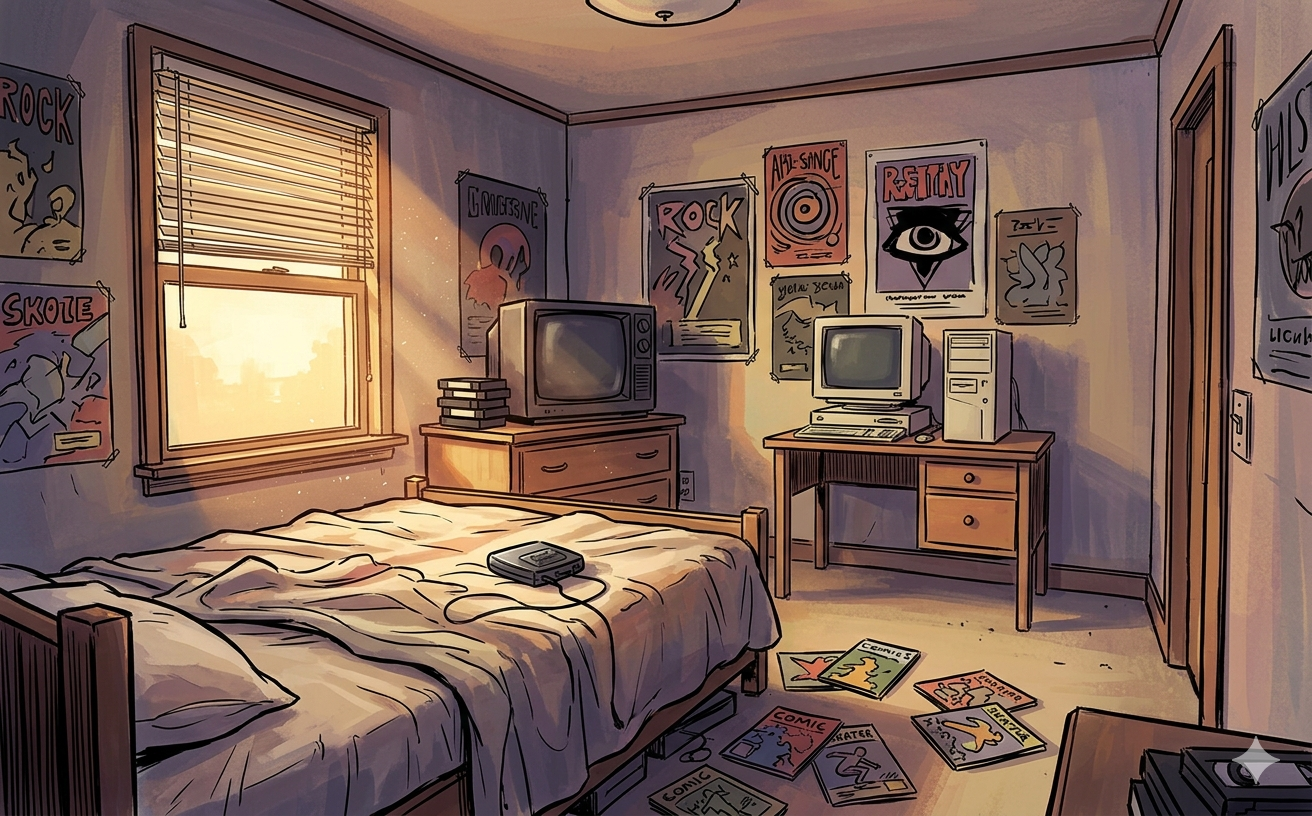
The campaign is set in Mercer Falls, Ohio, in the summer of 1996 — a slowly-dying small rust-belt town of about 18,000 people. You're playing a kid, 13 to 17 years old. School ended a few weeks ago and you've got the whole summer ahead.
Some specifics:
- It's effectively the real world. There are no dragons, no elves, no orcs, no wizards walking around in the open. As far as anyone in this town knows, magic isn't real. Strange things happen sometimes, but no one talks about them, and no one quite remembers them clearly the next day.
- You're a normal kid in a normal town. You have parents (or guardians, or a complicated home situation — your call). You have a bedroom, a school, friend groups, people you care about. We'll work together at Session 0 to make sure you have NPCs that matter to you and that the campaign has something to put in harm's way.
- 1996 tech baseline: pagers are common, cell phones are rare and limited, home PCs run dial-up internet, most people don't have email yet. You probably watch X-Files, listen to grunge or hip-hop or punk depending on your scene, rent VHS tapes from Blockbuster, and have a Walkman or a Discman.
- This is junior-high or early-high-school age. You're still figuring out who you are. Your parents still mostly run your life. You don't have a car (yet). The world is bigger than you and you can feel it.
- We're going to be playing in two distinct modes. Most days, you'll be living your kid's life: going to school, hanging out, navigating friendships and family, investigating things that interest you. Other days, you'll be doing something a lot less normal. Both modes use D&D rules, just differently — this campaign cares about your kid's downtime as much as it cares about combat, and the rules will reflect that. We'll cover the specifics at Session 0.
You don't need to know any more than this to build your character. The point is: this is a story about kids in a real-feeling 1996 small town, and you're playing one of those kids.
Building Your Character
We're using full D&D 5e rules. Nothing about your race, class, or background is mechanically restricted. Pick what you want to play. The cool things 5e lets you do, you'll be able to do.
What is different is how the mechanics manifest in the fiction. A few translations:
You start as a normal kid
When the campaign opens, your character doesn't know they have any of the abilities on their character sheet. They are, for all practical purposes, just a kid with a personality, a clique, and a life. Whatever your race is mechanically — tiefling, half-orc, elf — you don't have horns or pointed ears or green skin. You're a human teenager, and so is everyone you know.
In Session 1, something happens that wakes up what's been dormant in you. From that night forward, you have full mechanical access to everything your sheet says you have: racial features, spells, the works.
Your "race" is really a type of kid
Since everyone in Mercer Falls is human, your D&D race choice is really a choice about what kind of kid you are. Each 5e race has a personality and a vibe baked into its mechanical features — and those map naturally onto high school cliques and types.
A tiefling isn't a horned demon-kid in this setting. A tiefling is maybe the goth kid in eyeliner, with a candle in their bedroom they say is "decoration," whose infernal heritage expresses as the sense that something's listening to them, the temper they're growing into, the way candles flicker around them. Mechanical features stay the same; what they look like in the fiction is the kid they belong to.
All classes are open
Pre-awakening, your class is just an aspect of who your character already is. The fighter is an athletic kid. The wizard is the bookish one. The rogue is sneaky. The cleric is devout or empathetic. The bard is creative. The paladin takes things seriously in a way most of their peers don't. After the awakening in Session 1, those traits get backed up by actual mechanical capability.
Your background re-flavors to 1996 small-town life
D&D backgrounds map naturally onto high-school-ish things. A noble is the rich kid. An urchin is the latchkey kid. A soldier is the JROTC kid, or military family. A sage is the kid who reads at lunch. A folk hero is known around town for something — a save, a famous incident, a moment everyone in town saw.
Detailed suggestions live in Chapter 9. For now, pick a background that captures the kind of life your kid has been living up to this point, and we'll make the mechanical proficiencies and equipment fit.
Whichever order you build in, build the whole thing
You can build a kid first and then find the mechanics that fit. You can pick the race, class, and feats you want to play and then figure out what kind of kid expresses them. Either order is fine.
The PHB already covers the mechanical side of character creation in detail, though, so what this guide is for is the other side: making sure that when you're done, the character you have is also a kid — one with a family, a neighborhood, a life that was going on before any of this happened; people in their life who, if something happened to, they'd notice.
So if you'd rather pick your mechanics first and translate from there, do it. Then read chapters 3 and 4 and make sure the kid wrapped around those mechanics feels real. The campaign needs both halves; it doesn't care which one you started from.
Your Kid Has a Life
Your D&D character sheet is half of who your character is. The other half is the kid this character is when they're not adventuring — and in this campaign, that half is going to matter a lot. Most days, you'll be living your kid's life rather than swinging a sword. School, an awkward dinner with your parents, hanging out, getting into trouble, helping people, ignoring people. That's where a lot of this campaign happens.
When you're building your character, think about the things below. You don't have to nail down every detail — Session 0 is where we'll fill in gaps together — but the more you've thought about, the faster your kid will feel real at the table.
Family
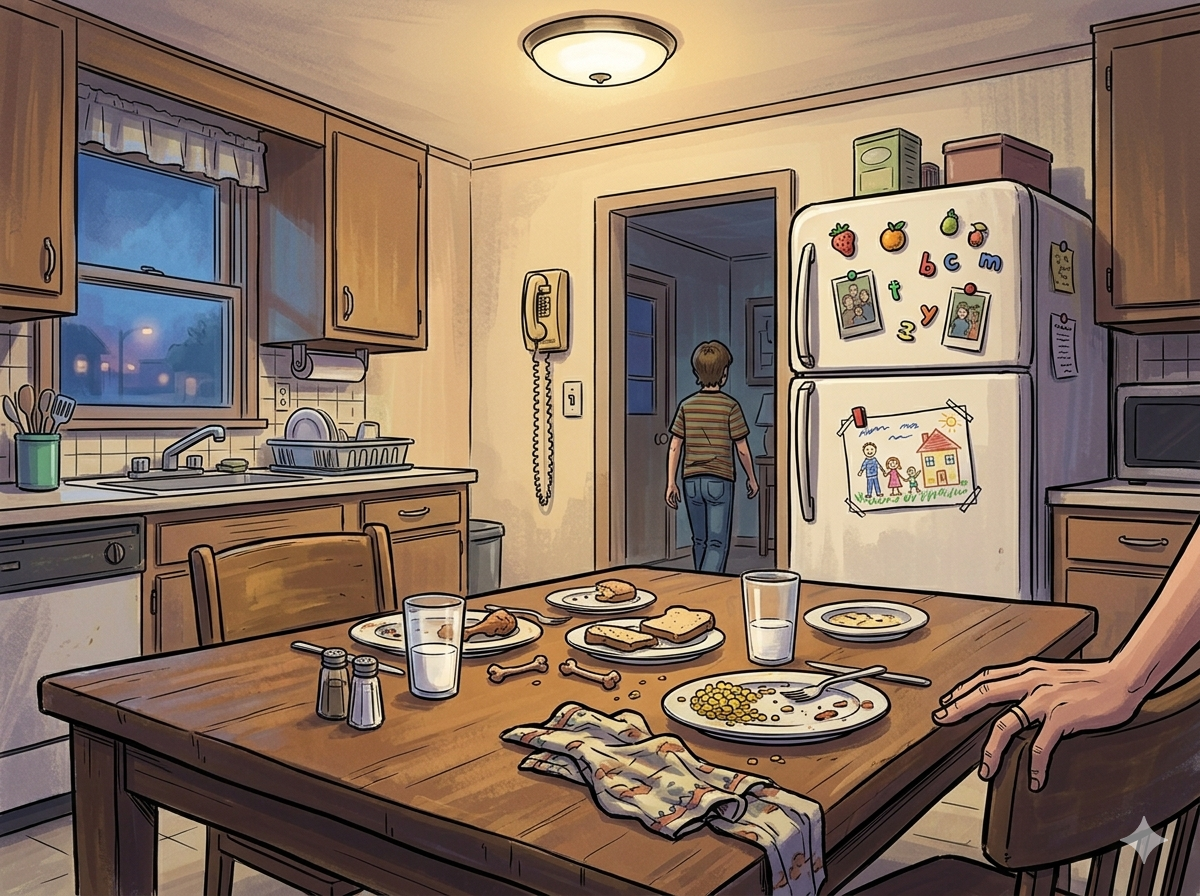
Who lives in your house? Parents? One parent? Step-parents? Grandparents who took you in? Siblings? An aunt who's the responsible adult in your life? Just your dad, who's around but distant? A complicated split-custody thing where you're at your mom's three days a week and your dad's the other four?
Family shapes daily life in real ways. A kid with strict parents has tighter curfews and more chores than a kid with a single mom working night shift. A kid with a younger sibling has babysitting responsibilities. A kid whose parents are checked out has more freedom and less anchoring. None of these are right or wrong — they're just who your kid is at home.
You don't need a tragic backstory. Most kids have boring, complicated, real families. Lean into that.
Where you live
Mercer Falls has a few distinct areas that will come up in play. You can place your house specifically (we'll figure out details at Session 0) or just have a general vibe in mind:
- The Heights — old money, big houses, lake views. Quiet streets, manicured lawns.
- The Flats — working-class houses east of the lake, smaller lots, a lot of duplexes. Lived-in.
- Sycamore Subdivision — newer cheap houses south of downtown, built post-1991 on former farmland. Cookie-cutter. Where families landed who got priced out of the older neighborhoods.
- Out in the county — farms, woods, the few roads with no streetlights. Far from school. Quiet.
- Above a storefront downtown — apartments over the businesses on Main Street. Less common, but real.
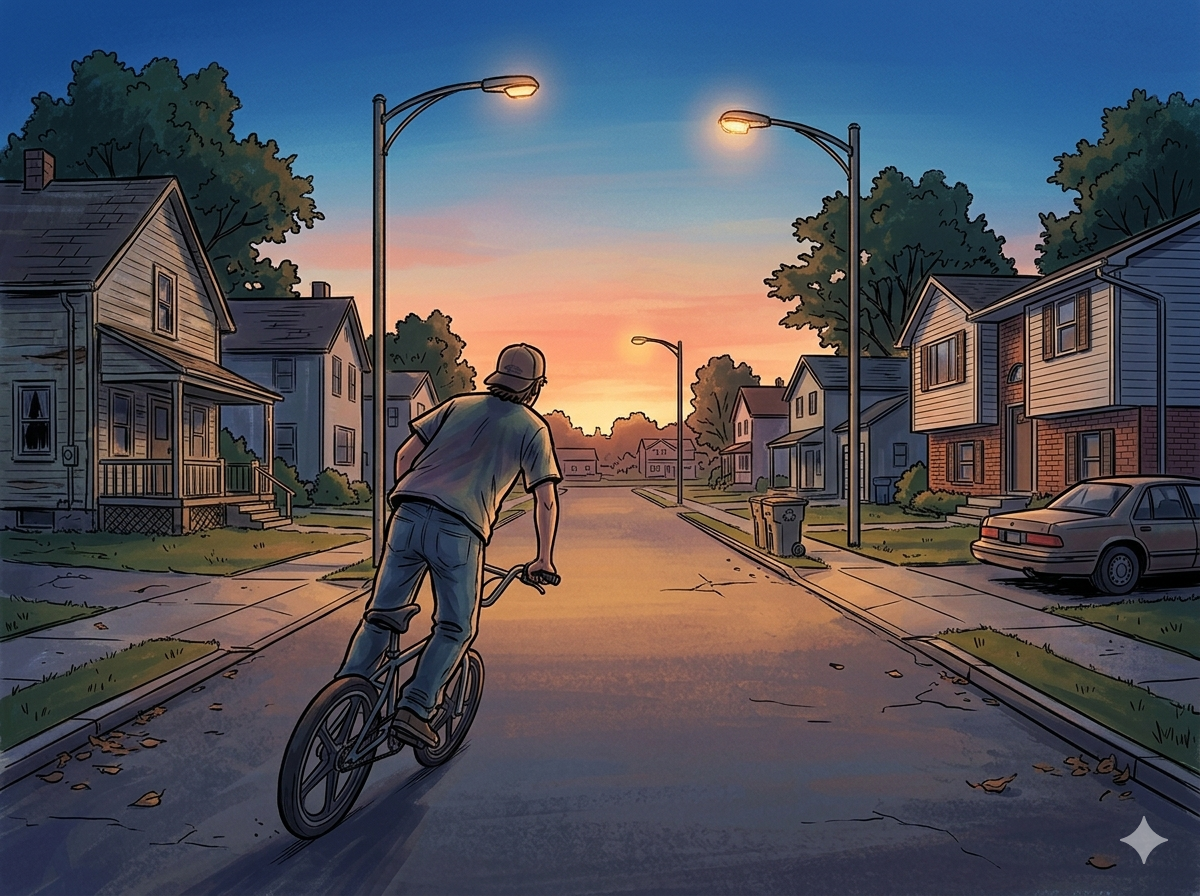
Where you live affects who your neighbors are, how you get to school, what you see when you ride your bike home after dark, and which other PCs you might naturally already know.
People who matter to you
Think of one or two people in your kid's life who aren't in the party — people they'd notice if something happened to. A teacher who's been kind to you. A neighbor you say hi to every morning. A coach. A friend's mom. Your weird older cousin. The guy who works the counter at your favorite store. The sibling you'd actually miss.
These are going to be NPCs in the campaign. Some of them will become important. Some of them will be in trouble at some point. The campaign needs people you care about so it can put them in the path of the story — and so you have reasons to fight for them.
You don't need to fill out a roster now. One or two named NPCs (your best friend who isn't in the party, your favorite teacher) is plenty for Session 0. We'll add more in play.
What this summer was supposed to be
Your kid had plans before this whole thing happened. Maybe a summer job they took to save up for something specific. A girl or boy they were trying to ask out. A college visit. A band they wanted to start with two other kids. A goal they were chasing on their own.
This matters because the campaign is going to interfere with all of that. The story has teeth precisely because your kid had a life going on already. The more specific you can be about what they were planning for this summer, the more there is to lose when things start going sideways.
I Double-dare you!
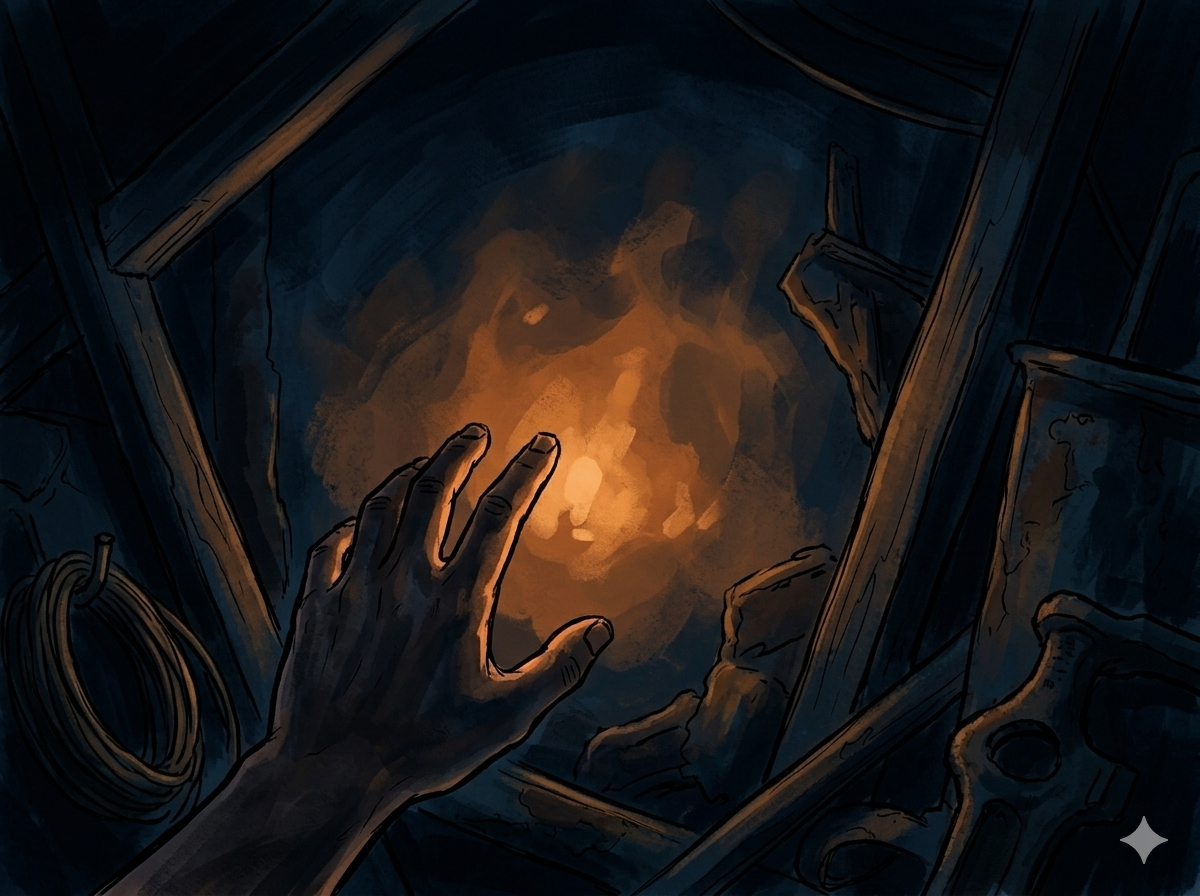
The campaign opens on a dare. The four of you have agreed to spend the night locked inside the grounds of the abandoned Mercer steel mill — the dead industrial site that dominates town vistas, located in the geographical center of the town. Some bullies (or older kids, or a rival friend group, whatever fits) issued the dare, will lock the gate behind you with a chain and padlock, and have promised to come back at sunrise to let you out. Until then: you're stuck inside the mill grounds for the night, no chickening out.
Why did your kid say yes? Were they dared by someone they couldn't back down from? Did they have something to prove? Did they want to impress one of the other PCs? Were they just bored? Were they pressured? Did they think it sounded fun and figure out later it wasn't? Were they daring themselves — they've been afraid of the mill since they were little, and tonight they're going to face it down?
You don't have to answer this now — we'll handle it in the opening scene — but having a sense of it before Session 0 helps. The answer should fit your kid's personality and shouldn't make you embarrassed to play them.
Talk to Each Other
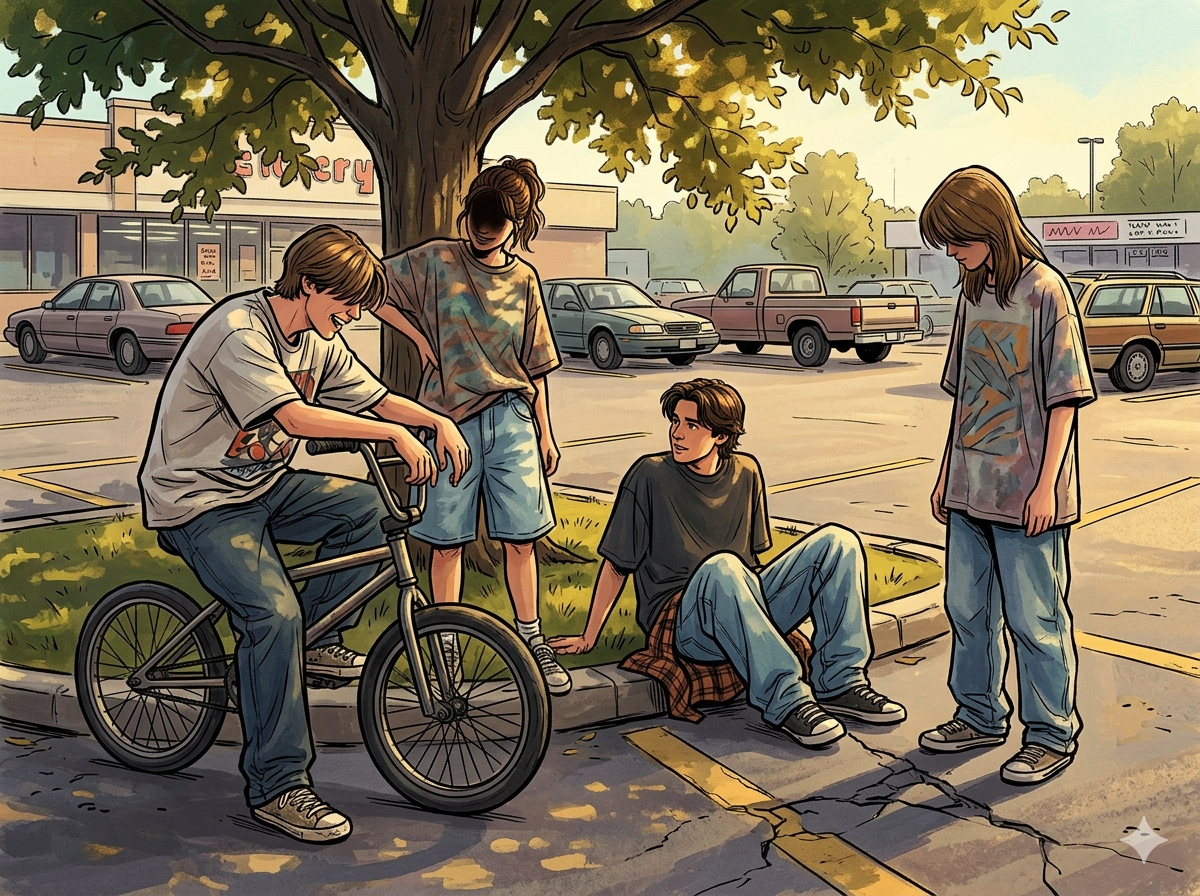
This campaign is about a group of high school kids in 1996 Mercer Falls, and the friend group dynamic that develops between you is going to be a real part of the story. Worth talking to each other about that before we start.
Some questions worth bouncing around with the rest of the group, in Discord or wherever:
- Do you all already know each other? Long-time neighbors, same friend group? Or are some of you strangers thrown together by circumstance? Both are good. A pre-existing friend group has stronger early dynamics. A group of "we barely knew each other" lets each character arc more dramatically over the summer.
- Same clique or different? Are you all skater kids, or are you a mixed group — the goth, the jock, the brain, the music kid, the new kid? Mixed groups create more interesting tensions; same-clique groups feel more grounded. There's no wrong answer.
- How long have you known each other? Since kindergarten? Last year? Two weeks?
- Are you actually friends, or just thrown together? Best friends since grade school. Frenemies who happen to end up in the same place. The kid everyone else tolerates because they're in everyone else's lives somehow.
- Are there pairs? Best-friend pairs within the larger group? Siblings? Crushes nobody's acknowledging? Old rivalries?
- Why are you all together on the dare night? Who suggested this dare-night trip in the first place? Who pushed for it? Who reluctantly came along? Why are you four the ones who ended up agreeing to spend the night at the mill together?
You don't have to lock anything in before Session 0 — we'll formally settle the group dynamic at the start of play. But the more you've thought about it (and the more you've talked to each other about it), the faster you'll feel like a real friend group when we start playing.
If a few of you want to text/Discord/whatever each other to start working out connections, do it. A character who shows up to Session 0 saying "I'm Maya's neighbor, we've known each other since first grade" is a stronger character than one who shows up unconnected. Two characters who show up having pre-agreed "my dad and her mom work at the same place, our families have done Thanksgiving together for years" gives the campaign tons to work with.
Race-to-Clique Inspirations
The mappings below are inspirations, not prescriptions. As long as the explanation of your kid's "deal" is coherent and we can agree on how their mechanical features show up in the fiction, you have a lot of flexibility. Pick one that resonates, mix-and-match, or use them as a model for adapting other races.
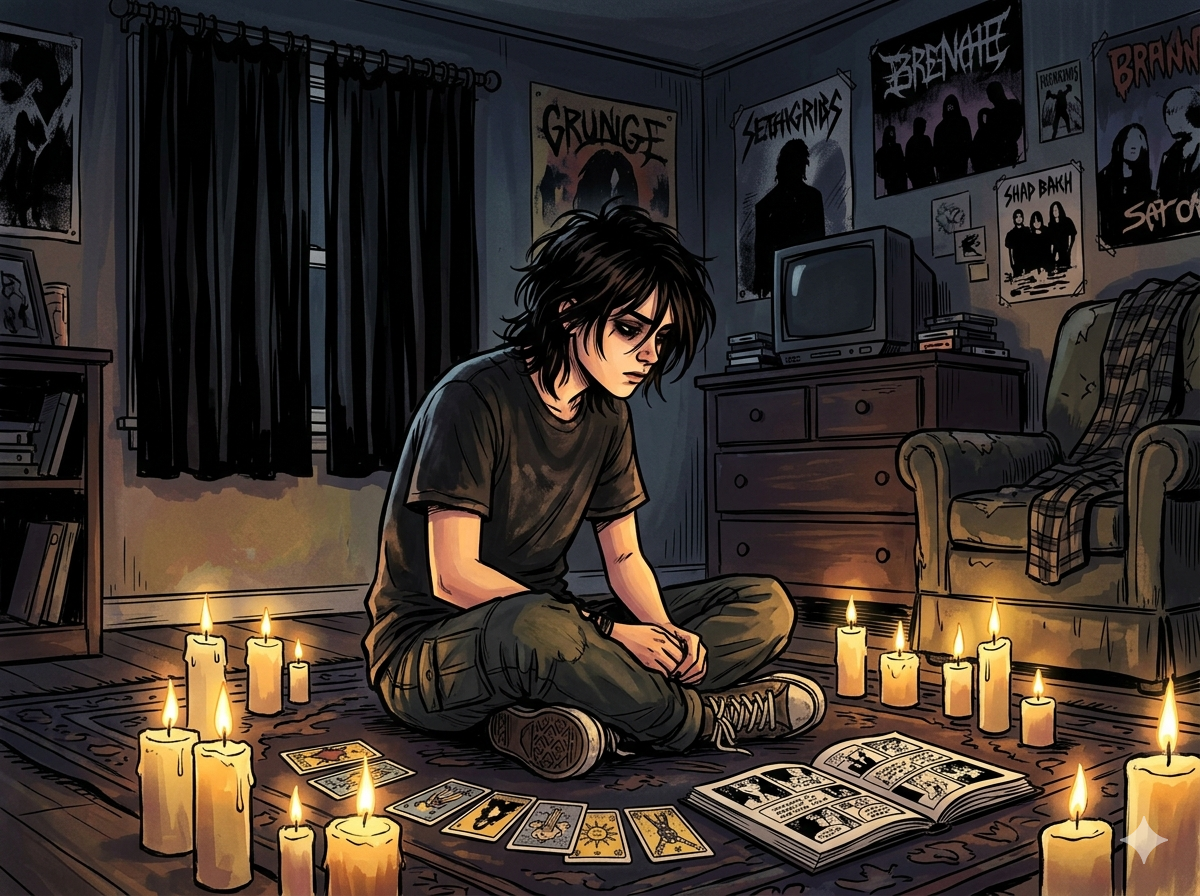
Tiefling → Goth Kid
The kid in all-black, eyeliner, NIN T-shirts, Sandman comics in the bookbag. Reads tarot cards "ironically." Has a candle in their bedroom they say is "decoration." Knows the cemetery routes. Talks to crows.
How the mechanical features re-flavor:
- Darkvision: You've spent enough nights in your room, in basements, walking the cemetery at 1 a.m., that you actually see in the dark.
- Hellish Resistance (fire): Words don't hurt the way they used to. You've grown a layer.
- Infernal Legacy (Thaumaturgy / Hellish Rebuke / Darkness): A "feeling" you've always had, now expressing itself. The candle that flickers without a draft. The voice you sometimes hear in the back of your head that gives you good advice.
Half-Orc → Jock
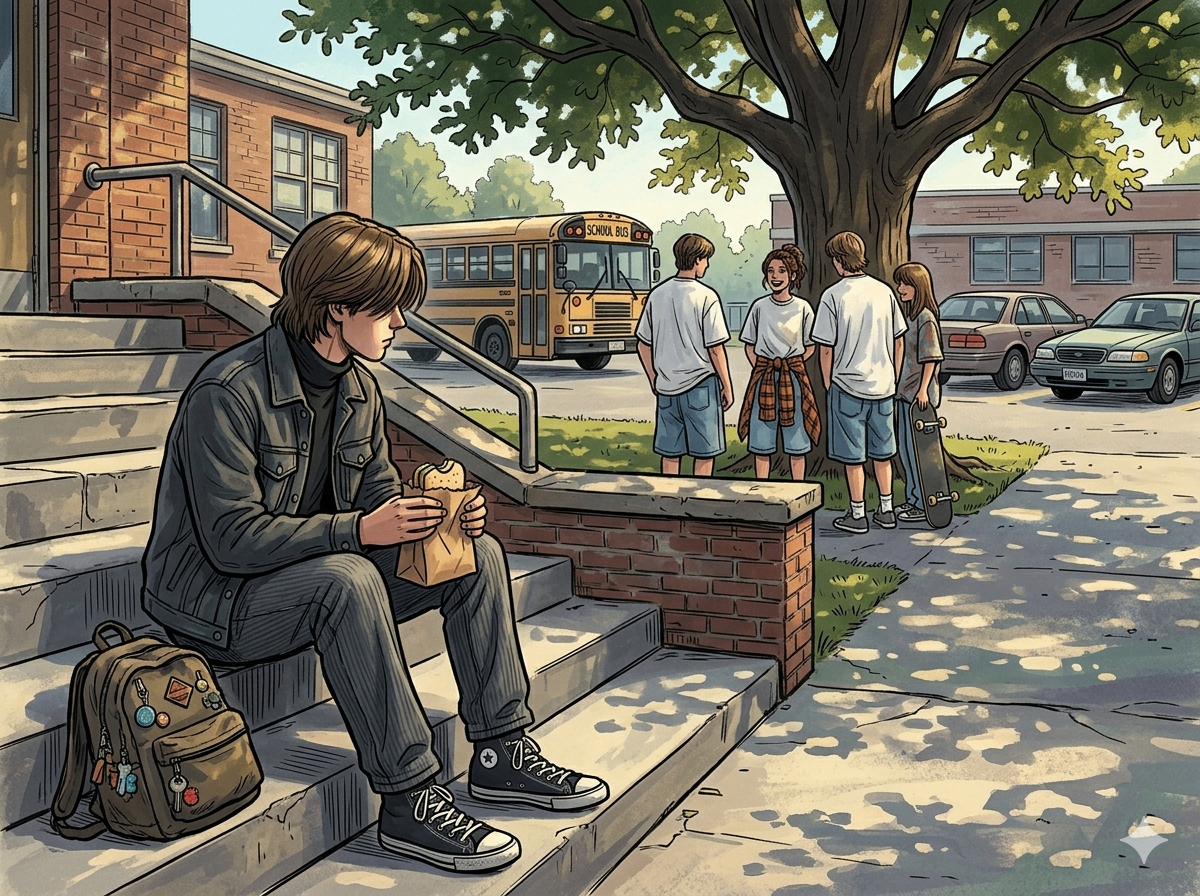
Varsity letterman jacket, weight room before homeroom, knows everyone in the cafeteria, doesn't always think before they act. Football, basketball, or wrestling. The people who've judged them by their build are usually wrong about who they actually are.
How the mechanical features re-flavor:
- Darkvision: Pre-dawn workouts, late practice nights, the empty gym at 6 a.m.
- Menacing: You don't have to try to be intimidating. People back up when you walk past.
- Relentless Endurance: Next play. Next rep. You don't quit. (When you'd hit zero HP, you don't.)
- Savage Attacks: When you connect, you connect.
Mountain Dwarf → Auto Shop Kid / Gearhead
Lives in their dad's garage. Has been turning wrenches since they were eight. Knows what every weird sound a car makes means. Smells faintly of motor oil even when they're dressed up. Reliable in a way that's almost old-fashioned.
How the mechanical features re-flavor:
- Darkvision: Hours spent under cars, in workshop fluorescents, basements, the back of the auto shop.
- Dwarven Resilience (poison): You've eaten things from gas-station microwaves and lived. You can hold your liquor.
- Tool Proficiency (smith's / mason's / brewer's): Literal — you know real tools because you've used them. Your "smith's tools" is your dad's torque wrench set.
- Stonecunning: You can look at a structure and know what's load-bearing, what's gonna fail, what to fix first.
Hill Dwarf → Country / Farm Kid
Lives outside town, on land. Up before everyone. Drives a truck that's older than they are. Knows how to do things city kids never learn. Quiet, but says important things when they say something.
How the mechanical features re-flavor:
- Darkvision: Pre-dawn chores, walking back from the barn at midnight.
- Dwarven Toughness: You've worked through worse. (Extra HP is just you not being soft.)
- The rest like Mountain Dwarf, but with a farmhand frame instead of a shop frame.
High Elf → Theater Kid / Honors Student
Up reading at 1 a.m. Rehearsing lines under their breath. AP English with the teacher who actually likes them. The school plays aren't a hobby; they're who this kid is. Articulate, present, slightly above the day-to-day stuff.
How the mechanical features re-flavor:
- Darkvision: Late nights studying or rehearsing in dim spaces, eyes adjusted.
- Trance: You barely sleep. Four hours and you're up reading.
- Fey Ancestry (charm resistance): You've been around enough fakes to spot manipulation a mile off.
- Keen Senses: You notice what other people miss. The way someone's voice catches when they lie, the small change in mood.
- Cantrip: A "talent" you've always had — perfect pitch, photographic memory, dead-on impressions.
Wood Elf → Outdoorsy / Cross-Country Runner
The kid you see running on country roads at 6 a.m., a small backpack, no music. Knows the woods around town better than anyone. Quiet at school, comes alive on trails. Has a deep stillness that's hard to explain.
How the mechanical features re-flavor:
- Mask of the Wild: You know how to disappear in woods. Not magic — just woodcraft taken further than anyone realizes.
- Fleet of Foot: Cross-country, literal. You're fast.
- Trance: You catnap. Twenty minutes and you're back.
Drow → New Kid / The Outsider
Just transferred from somewhere else. Doesn't fit any clique because they don't know the local rules yet. Watches before they speak. Has habits that read as exotic or off — eats lunch alone outside, walks the long way home, wears something nobody else wears. Carries a different upbringing visibly.
How the mechanical features re-flavor:
- Superior Darkvision: You've spent more time alone at night than your peers ever have.
- Sunlight Sensitivity: Literal — you're a night owl, daylight isn't your time.
- Drow Magic (Faerie Fire / Darkness): Things you can do that you don't talk about. You learned them where you came from.
(The "outsider" framing here is about being new to Mercer Falls specifically — about not knowing local rules, local people, local rhythms — not about being ethnically or racially othered.)
Lightfoot Halfling → Skater
Skateboard never far away. Baggy jeans, Vans, Thrasher in the back pocket. The half-pipe behind the Kroger is a second home. Lands stuff that should break them. Easy to overlook in a crowd, hard to forget once you've seen them on the board.
How the mechanical features re-flavor:
- Lucky: You always land. Even when physics says you shouldn't.
- Brave: You've fallen off enough things to not fear most things.
- Halfling Nimbleness: Fences, narrow gaps, getting through crowds — easy.
- Naturally Stealthy: People miss you in a room. You blend in.
Stout Halfling → Wrestler / Gymnast
Lower weight class wrestler, or gymnast, or both. Compact and dense in a way that surprises people. Conditioning is religion. Doesn't get knocked down even when they should.
How the mechanical features re-flavor:
- Stout Resilience (poison): You can take a hit. Years of training.
- Lucky / Brave / Nimbleness: Same as Lightfoot.
Rock Gnome → AV Club / Computer Kid
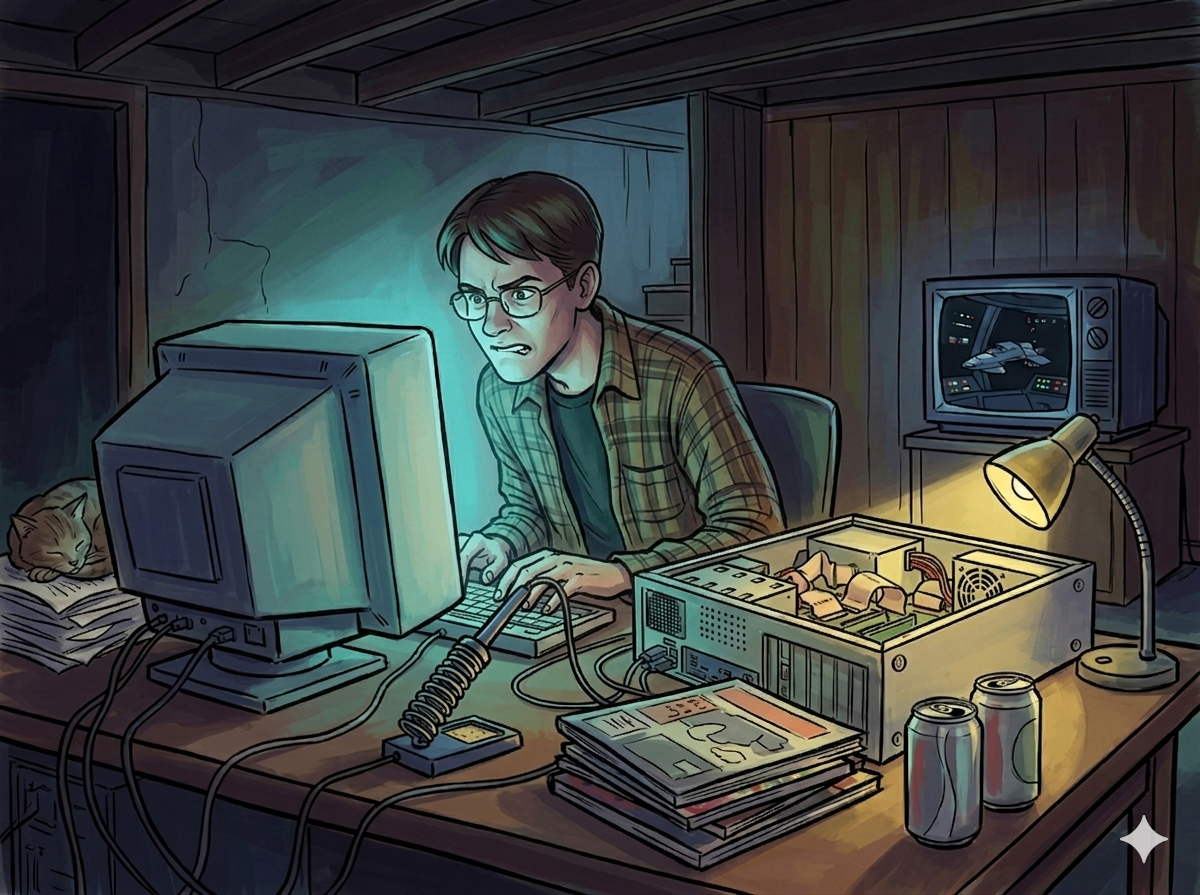
Cluttered desk, mods their own PC, runs a BBS from the basement, owns more wires than the school AV closet. Reading Slashdot before that's a thing. The teachers know who to call when the projector breaks. Seems younger than their age until they get going about something they're into, then suddenly seems older.
How the mechanical features re-flavor:
- Darkvision: Too many hours in front of a CRT in a dim room.
- Gnome Cunning: Skeptical thinker. Hard to fool with anything that doesn't math out.
- Tinker: Literal — you can build small clever things. Music boxes, fire starters, alarm clocks.
- Cantrips (artificer-flavored): A clever rig you've built that does something improbable.
Forest Gnome → Naturalist / Bio Nerd
Birding before school. Knows every tree on the way to school by name. Has a butterfly pinning kit. Volunteers at the nature center. Talks to the cat at the gas station and the cat seems to listen.
How the mechanical features re-flavor:
- Speak with Small Beasts: You've watched animals long enough that you read them. Eventually, the read goes both ways.
- Minor Illusion: You know how to disappear in the woods. Camouflage and stillness, taken supernatural.
Half-Elf → Popular Kid / Charismatic In-Between
The kid who's friends with everybody. Doesn't quite fit one clique because they fit pieces of all of them. Prom court. Student council. The one you ask for advice. Doesn't realize how unusual their social ease is.
How the mechanical features re-flavor:
- Skill Versatility: You're good at multiple things — band AND track AND yearbook. People wonder how you have time.
- Fey Ancestry: People try to manipulate you all the time. You see through it instantly.
- Darkvision: Late-night phone calls. Parties. The social life never sleeps.
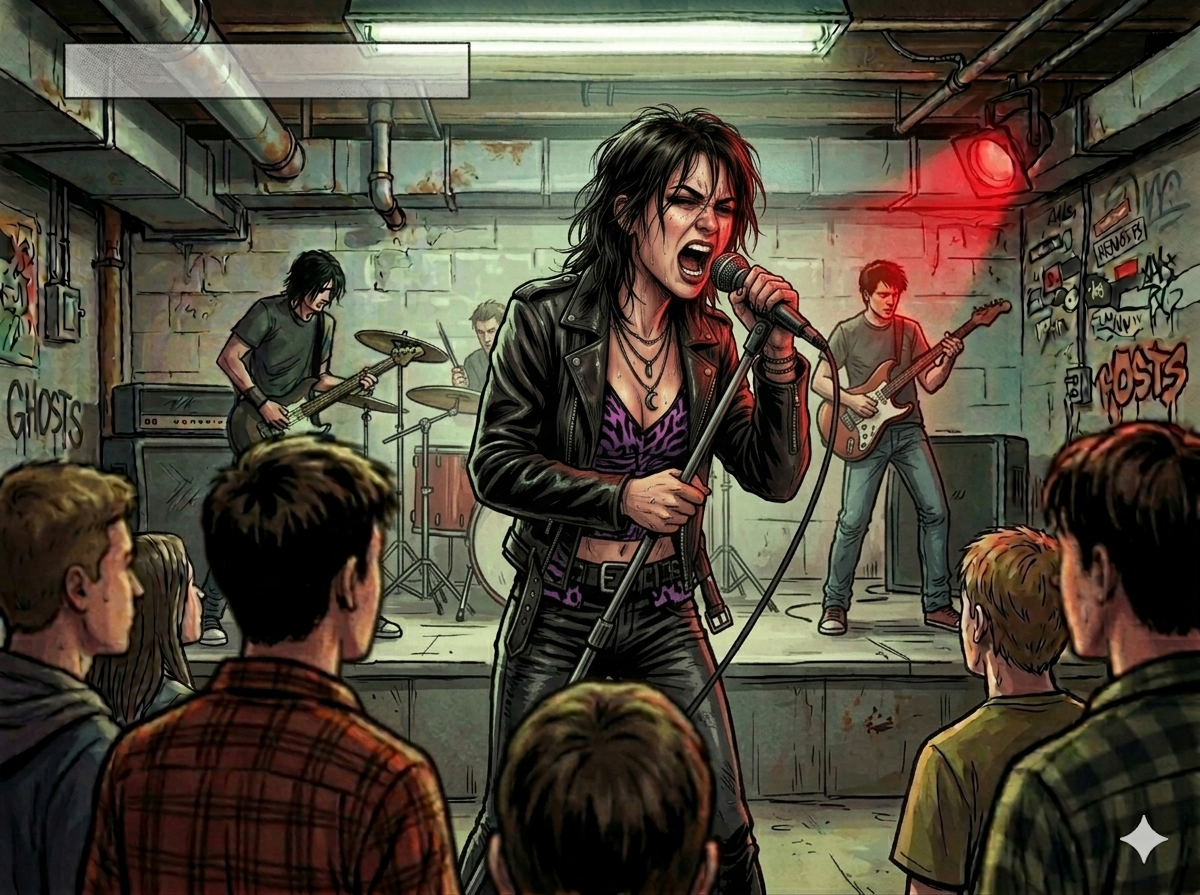
Dragonborn → Punk Rocker / Band Frontperson
Garage band. Hardcore or pop-punk depending on taste. Rehearses till the neighbors call. Has presence — doesn't fade in a crowd. When they let loose at a basement show, the room knows it.
How the mechanical features re-flavor:
- Breath Weapon: Your voice. Your roar. When you need to clear a room or command attention, people feel it physically.
- Damage Resistance (your color/element): You're hardened to the kind of intensity that defines you. Fire-breath punk shrugs off heat; cold-breath punk doesn't feel winter.
Variant Human → Anyone Else
The most flexible option. If you want to play a clique that isn't on this list — preppy student council kid, choir kid, theater tech, wiccan, smoker, raver, ROTC kid, riot grrrl, latchkey loner — Variant Human is the easiest mechanical fit. You get an extra skill, a feat, and a +1 to two stats. Build the kid, then assign mechanics to fit.
Extended Inspirations
(less common races)
If you want to go off-PHB, here are some popular options.
The "Wrong" Clique Is Fine
Read these mappings as suggestions, not assignments. If you want to play any of these races as a different kind of kid, do it.
A Tiefling cheerleader? Sure — her infernal heritage just expresses as charisma and nerve, not eyeliner.
A Half-Orc honors student? Great — his Menacing is just how seriously people take him in debate.
An Elf jock? Perfect — Trance becomes "doesn't really need much sleep before a game," Fey Ancestry becomes "sees through trash talk," Keen Senses is reading the field.
A Dwarf theater kid? Their "stonecunning" is set design and load-bearing structures.
The mechanical features stay; the flavor adapts to the kid you want to play. We'll work it out.
Races We're Not Doing
Some 5e races are hard or impossible to flavor for this setting. Aarakocra (literal flight), Centaurs (literal four legs), and similar physically impossible options aren't going to work as humans. If you have an idea for one of these, talk to me — I'll hear pitches, but you'll need to do significant lifting to make it make sense.
Same goes for any race where the mechanical advantage depends on a literal physical impossibility for a human. We can probably work around most things if you're willing to flex some creativity muscles, but flight as a racial ability is the one that really just doesn't fit.
Background Inspirations
D&D backgrounds map naturally onto high-school-ish things. Pick one that fits the kid you're building. The mechanical proficiencies and equipment translate directly; the flavor adapts.
| Background | High-school equivalent |
|---|---|
| Acolyte | Church kid, youth group leader |
| Folk Hero | Known around town for something — a big save, a famous incident |
| Soldier | JROTC kid, parent in the military, military family vibes |
| Sage | Bookworm, library kid, that kid who reads at lunch |
| Criminal | Gets into actual trouble — shoplifts, vandals, hangs out where they shouldn't |
| Outlander | Country kid, runs the woods alone, knows the river |
| Charlatan | Runs hustles at school — fake hall passes, loaded dice in the cafeteria |
| Entertainer | Theater kid, garage-band kid, drama club fixture |
| Guild Artisan | Works for the family business after school |
| Hermit | Loner, lives way out of town, doesn't socialize |
| Noble | Rich kid, mayor's kid, the family with the big house |
| Sailor | Works summers at the lake, family on the river, dad's a Coast Guard guy two towns over |
| Urchin | Latchkey kid, parents absent or working multiple jobs |
These are inspirations, not prescriptions. As long as your kid's background makes sense — for who they are, where they live, and what they've been doing with their life so far — we can work it out.
One Last Thing
Whether you build the mechanics first or the kid first, don't skip the kid part. The character sheet is half of your character. The other half — the family, the neighborhood, the people they care about, the summer they were planning on having — is just as much a part of the story as anything you'll roll for.
Bring a kid you want to play.
We'll make the rest work.